


Get Quote

Energy Storage Safety Upgrade: How Should Connection Solutions Keep Up?
ESS Electrical Interconnection: An Underrated Reliability Factor
The energy storage industry is shifting from rapid capacity expansion to high-quality development. As installed capacity continues to grow, incidents such as thermal runaway and electrical fires are drawing increased attention to system-level safety.
Against this backdrop, electrical interconnection long regarded as a basic component is now undergoing stricter technical scrutiny and standard upgrades.
1. Evolution of Energy Storage Safety
Energy storage safety has evolved from cell-level protection to system-level reliability.
Early focus was placed on battery chemistry stability and BMS monitoring. However, as systems scale and operating lifetimes extend, risks related to electrical connections, thermal management, and insulation coordination are becoming more prominent.
Failure analysis shows that electrical faults are a major root cause:
- Increased contact resistance → localized overheating
- Insulation degradation → short circuits
- Vibration-induced loosening → unstable connections
This highlights that system safety depends not only on cell quality, but also on the design margin, process control, and long-term stability of interconnection systems.
Meanwhile, standards such as UL 9540 and IEC 62933 are tightening requirements, making material certification, traceability, and validation of connection components increasingly mandatory.
2. Impact of Emerging Storage Technologies
Different storage technologies impose diverse requirements on connection solutions:
Electrochemical Storage (Mainstream)
Dominated by lithium-ion (especially LFP), requiring:
- High current-carrying capacity
- Low contact resistance
- Compact structural integration
Copper or Cu-Al transition busbars are widely used, with careful material matching to prevent galvanic corrosion.
Emerging technologies (sodium-ion, flow batteries, solid-state) demand adaptable connection designs.
2.1 Mechanical Storage
(Flywheel, compressed air, gravity)
- High power, long lifespan
- Requires strong transient current capability and EMI resistance
2.2 Electromagnetic Storage
(Supercapacitors, SMES)
- Millisecond response
- Requires low inductance and high-frequency performance
2.3 Thermal & Hydrogen Storage
- Less electrical demand overall
- Requires high-temperature and corrosion-resistant connections in specific subsystems
3. Key Technical Requirements for Connection Solutions
3.1 Current Capacity & Thermal Control
High-power systems demand hundreds to thousands of amps. Poor material selection or insufficient cross-section leads to overheating and insulation aging.
3.2 Stable Contact Resistance
A critical reliability factor. High resistance accelerates heat generation and creates a failure feedback loop. Requires strict control of:
- Materials
- Surface treatment
- Torque management
3.3 Mechanical Strength & Fatigue Resistance
Connections must withstand vibration, shock, and thermal expansion. Flexible busbars help absorb stress and improve durability.
3.4 Corrosion Resistance & Lifecycle Matching
With 10–15 year lifespans, components must perform reliably under humidity, salt spray, and temperature cycling.
- Copper: better corrosion resistance, higher cost
- Aluminium: lightweight, requires plating or Cu-Al bonding
4. Value of Customized Connection Solutions
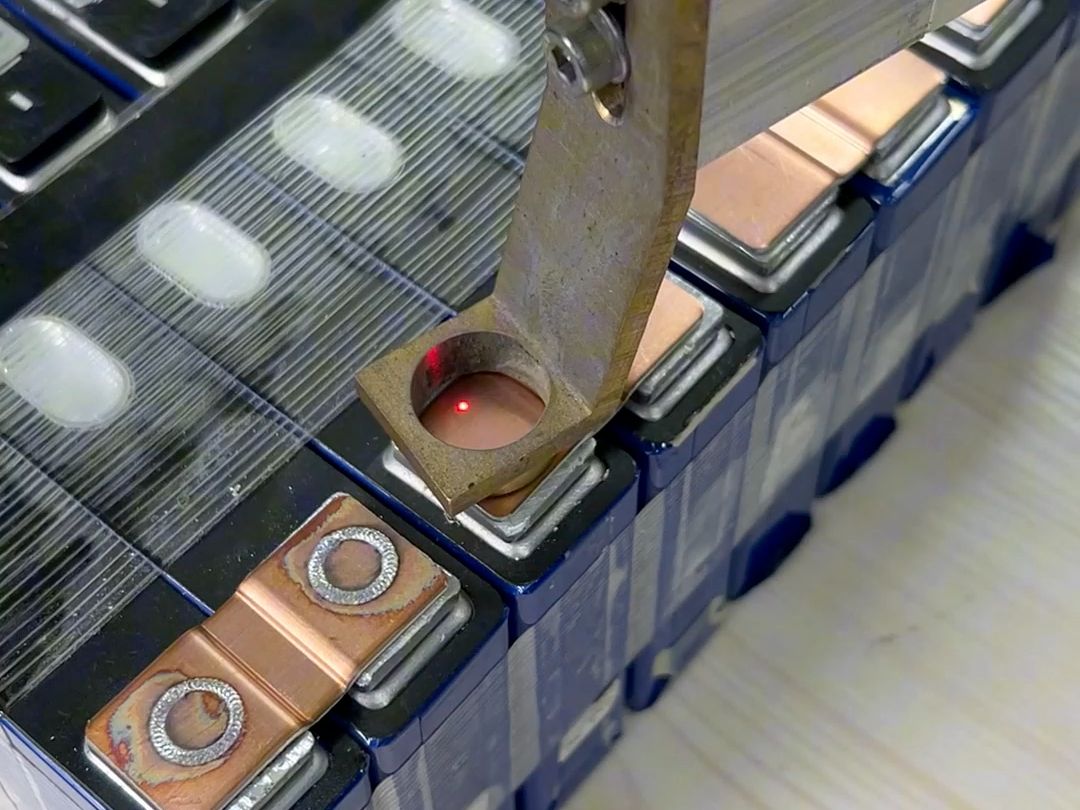
Standard components often fail to meet the diverse requirements of battery modules, layouts, and installation constraints.
Customized solutions enable:
- Optimized material selection (Cu, Al, Cu-Al hybrid)
- Structure adaptation (geometry, bending, mounting)
- Surface treatment (tin, nickel, silver plating)
- Flexible design for vibration and tolerance compensation
- Validation & scalable production
Early-stage engineering involvement significantly improves system reliability and installation efficiency.
5. Industry Trends Shaping Connection Design
- Long-Duration Storage Growth: Higher cycling frequency and longer operation demand improved creep resistance and durability.
- PV-Storage-Charging Integration: Stricter requirements for high-voltage safety, insulation, and aging resistance.
- Virtual Power Plants (VPP): Drives demand for smart, traceable, and highly reliable connection systems.
- Higher Voltage Platforms: Shift from 1000V to 1500V, with exploration toward 2000V, increasing demands on insulation coordination and clearance design.
Conclusion
As energy storage safety requirements intensify, interconnect solutions are evolving from passive components to active safeguards. Reliable power transmission is both the foundation of system operation and a critical defense against electrical failures. For integrators and battery manufacturers, partnering with a supplier that offers strong R&D, rigorous process control, and customized delivery has become essential to long-term system reliability.
With over a decade of experience in battery connection systems, RHI delivers OEM-level R&D and design capabilities. Backed by deep manufacturing expertise, RHI provides end-to-end custom solutions—from structural design to production—tailored to specific applications. Its high-precision copper and aluminum busbars help customers enhance both performance and safety.
RHI ELECTRIC | Battery Interconnection Solutions