


Get Quote


Global Energy Storage Market: Industry Trends, Growth Drivers, and Supply Chain Opportunities
Driven by the global energy transition and power system decarbonization, energy storage is rapidly evolving from a supporting technology into critical energy infrastructure. As solar and wind capacity continue to expand worldwide, demand for grid flexibility, frequency regulation, and peak-load balancing is accelerating, pushing the storage industry into a new stage of large-scale growth.
According to the International Energy Agency (IEA), electricity demand continues to rise globally while the power sector remains a major source of carbon emissions. Improving renewable energy integration and grid stability has therefore become a strategic priority for many countries.
Compared with traditional pumped hydro storage, lithium-ion battery storage has commercialized rapidly in recent years, enabling broader deployment across utility-scale, grid-side, commercial & industrial, and residential applications.
Industry consensus increasingly views energy storage as a key enabler of renewable integration, grid resilience, and energy security.
1. The Core Growth Driver: Rising Renewable Energy Penetration
The rapid growth of energy storage is fundamentally driven by the expansion of renewable energy.
Unlike conventional thermal power, solar and wind generation are intermittent and variable. As renewable penetration increases, power systems require more flexible resources to maintain supply-demand balance and grid stability.
Energy storage mainly provides the following functions:
Grid Stability and Frequency Regulation
Energy storage systems can respond within milliseconds through fast charging and discharging, helping stabilize grid frequency and voltage.
Peak Shaving and Capacity Support
Storage systems charge during off-peak hours and discharge during peak demand periods, improving grid efficiency and reducing capacity pressure.
Renewable Energy Integration
Solar generation peaks during daytime, while electricity demand often rises in the evening. Energy storage helps balance this timing mismatch and improves renewable utilization.
As renewable installations continue to grow globally, energy storage is shifting from an optional supporting system to essential power infrastructure.
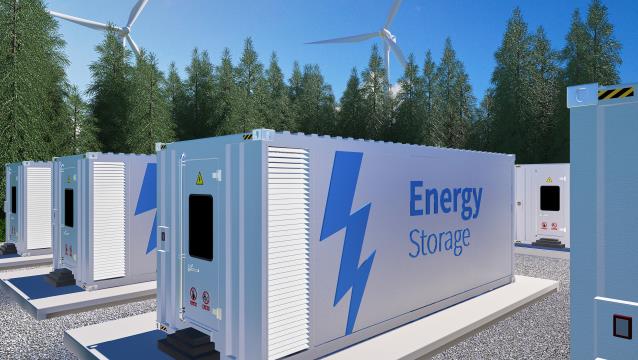
2. Global Energy Storage Market: Three Representative Models
China: Rapid Growth and Complete Supply Chain
China has become one of the world’s largest and fastest-growing energy storage markets.
Driven by large-scale renewable deployment and grid flexibility demand, China’s new energy storage capacity has expanded rapidly in recent years. The country also benefits from a highly integrated lithium battery supply chain covering battery cells, PCS, BMS, system integration, and upstream materials.
China’s storage market now includes multiple application segments:
- Renewable energy paired storage
- Standalone grid-side storage
- Commercial & industrial storage
- Residential storage
- Data center and microgrid storage
The industry is gradually transitioning from policy-driven growth to market-oriented operation, with increasing focus on utilization rates, profitability, safety, and long-term operational performance.
United States: Mature Market-Based Business Models
The U.S. is one of the world’s most market-oriented storage markets.
Storage revenue is largely supported by electricity spot markets, ancillary services, capacity markets, and time-of-use pricing mechanisms. In markets such as CAISO and PJM, storage systems can participate in multiple power trading services and generate diversified revenue streams.
Utility-scale storage deployment continues to grow rapidly, supported by rising renewable capacity, grid reliability needs, and increasing power demand from data centers.
Compared with China, the U.S. market places greater emphasis on long-term asset returns and operational capabilities.
Germany: A Mature Residential Storage Market
Germany is one of the world’s most developed residential energy storage markets.
High electricity prices and strong demand for energy independence have accelerated adoption of rooftop solar combined with home battery systems. Residential users increasingly seek to improve self-consumption and reduce reliance on the grid.
Across Europe, countries including Italy, the UK, and Spain are also seeing growing demand for residential and commercial storage systems.
However, the European market maintains strict requirements for safety certification, product quality, and localized service support.
3. Two Key Conditions for Storage Market Growth
Global experience shows that large-scale storage deployment depends on two main factors:
High Renewable Energy Penetration
The higher the renewable share, the stronger the demand for flexible balancing resources. Continuous investment in solar and wind power directly drives storage demand growth.
Market-Based Electricity Mechanisms
The profitability of storage projects depends heavily on electricity market structures, including:
- Time-of-use pricing
- Spot electricity trading
- Ancillary service markets
- Capacity compensation
- Demand response mechanisms
The maturity of these systems strongly affects project economics and investment activity.
4. Industry Trends: From Rapid Expansion to High-Quality Growth
After years of rapid expansion, the storage industry is entering a more rational development phase.
Future competition will increasingly focus on the following areas:
Safety and Reliability
As project scale increases, thermal management, fire protection, lifecycle management, and system stability are becoming critical industry priorities.
Long-Duration Storage Technologies
Beyond lithium-ion batteries, technologies such as sodium-ion batteries, flow batteries, compressed air storage, and hydrogen storage are gaining attention for different application scenarios.
Digital Energy Integration
AI-based dispatching, Energy Management Systems (EMS), and Virtual Power Plants (VPP) are improving storage system efficiency and operational value.
Supply Chain Localization
Many countries are strengthening domestic manufacturing and energy security policies, driving regionalization of the storage supply chain.
Overall, industry competition is shifting from pure capacity expansion toward technology capability, operational efficiency, and commercial sustainability.
5. Growing Demand for High-Reliability Electrical Connection Solutions
As storage systems scale up, requirements for electrical connection components are also increasing.
In utility-scale, commercial, and residential storage systems, busbar solutions must provide:
- High current carrying capacity
- Low resistance and low power loss
- Long-term operational stability
- Reliable insulation and safety protection
- Flexible installation and system compatibility
Under high-rate charging, elevated temperatures, and long-cycle operation, the conductivity, structural design, and manufacturing quality of connection components directly impact system efficiency and safety.
As the storage industry moves toward larger-scale and higher-reliability applications, suppliers with strong customization capability, manufacturing consistency, and project delivery experience will gain greater opportunities.
6. Conclusion
The global energy storage industry is entering a critical stage of large-scale commercialization.
Over the long term, renewable energy expansion, power system decarbonization, electricity market reform, and energy security concerns will continue driving industry growth. At the same time, the sector is shifting from policy-driven expansion toward commercially sustainable development.
Future competition will increasingly depend on technology, safety, operational capability, global delivery capacity, and supply chain integration.
For the broader industry chain, energy storage is not only a fast-growing market, but also a key part of the future global energy system.